Episode Transcript
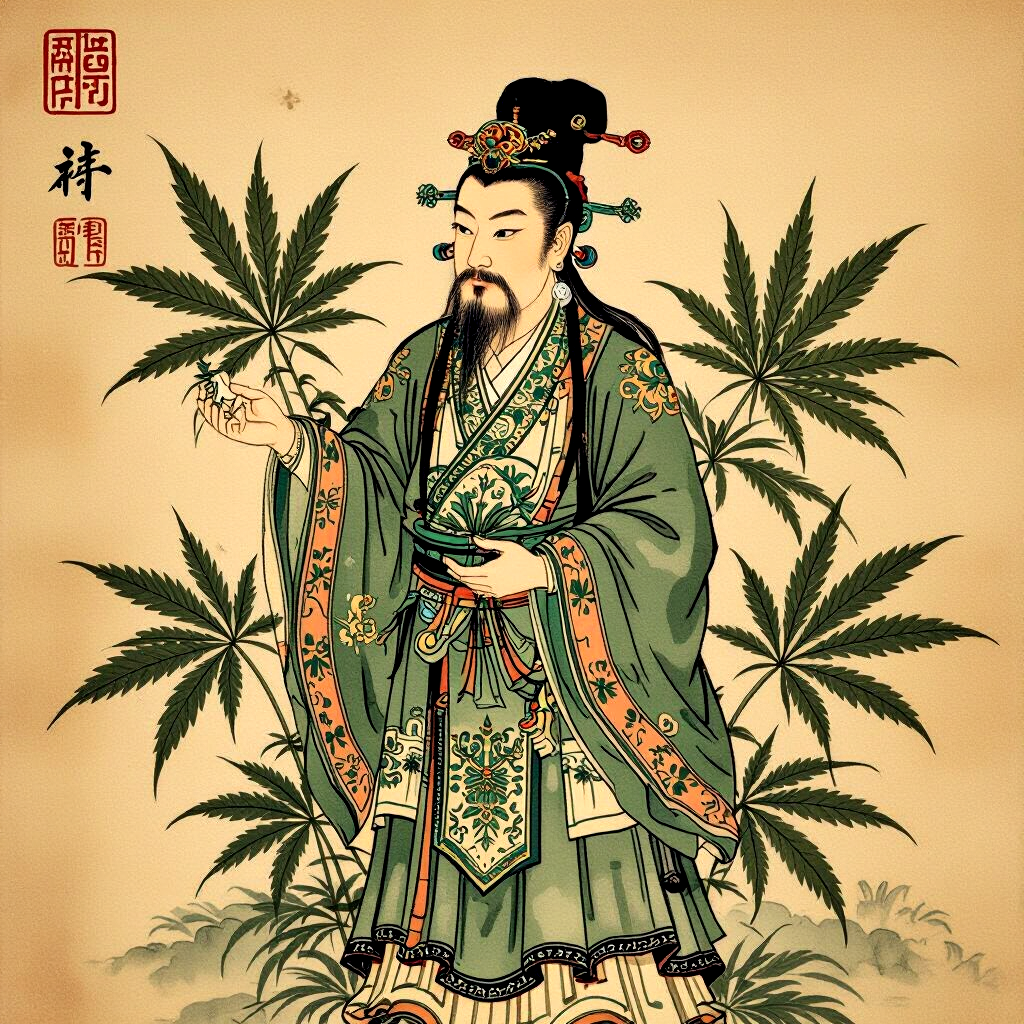
[00:00:00] The remarkable story of cannabis in China begins with its earliest domestication in East Asia during the Neolithic period, a fact confirmed through extensive genetic research analyzing 110 different cannabis strains worldwide.
[00:00:19] This research definitively showed that all modern hemp and drug type cannabis descended from an ancestral gene pool in this region.
[00:00:30] Archaeological evidence supports this timeline with notable discoveries including two 500-year-old cannabis specimens in the Yanghai Tombs of Xinjiang, which suggest sophisticated ritualistic or medicinal applications aligned with shamanistic practices of the time. The concept of land race cannabis strains naturally adapted to specific environments over generations is particularly significant in the Chinese context.
[00:01:05] These ancient varieties known as basal hemp, were predominantly found along China's northern border near Mongolia, with domesticated hemp appearing in the Northeast, the near North Korea.
[00:01:19] Intriguingly, genetic traces of these same basal varieties have been discovered as far away as the American Midwest, demonstrating the far reaching influence of these ancestral strains.
[00:01:34] Chinese cultivation of cannabis was remarkably sophisticated as evidenced by their detailed classification system.
[00:01:43] They developed six distinct terms for different hemp huoma, fire hemp, hua ma ren, fire hemp seed, Xian ma, lion hemp, huang ma, yellow hemp, mazi hemp seed and ma fen. Female hemp inflorescence. Among these, dama, or big hemp, gained particular prominence for its medicinal properties, including anti inflammatory, analgesic and anti anxiety effects. The versatility of hemp in ancient Chinese society cannot be overstated.
[00:02:19] Before the introduction of cotton during the Northern Song dynasty, hemp served as the primary textile material, being used for everything from everyday clothing to sacred funerary shrouds.
[00:02:37] The plant's fibers were instrumental in paper production. With archaeological evidence dating back to 206 BC.
[00:02:46] Hemp seed also played a crucial role in nutrition, serving as a dietary staple alongside barley, rice, wheat and soybeans during various historical periods. From 770 BC through 220 AD the medicinal applications of cannabis in China date back to at least 2000 BC as documented in the Materia Medica Sutra Pentats Tao. This ancient text made important distinctions between ma fin, considered toxic and potentially hallucinogenic, and ma zi, non toxic.
[00:03:28] While the text noted that excessive consumption of mafin could produce hallucinations, it's believed this referred to the resinous bract around cannabis seeds rather than the seeds themselves, which contain negligible amounts of thc.
[00:03:46] The historical record of psychoactive cannabis use in China is sparse but intriguing. A notable reference appears in in the Mingyi Pie, written by a 5th century AD Taoist priest, describing how necromancers combined cannabis with ginseng for divinatory purposes.
[00:04:06] These practices were typically restricted to religious leaders and shamanic practitioners, explaining their limited documentation in historical records.
[00:04:19] Such shamanistic practices had largely disappeared by the Han Dynasty, 206 BC to 220 AD Chinese agricultural knowledge of hemp cultivation was remarkably advanced for its time.
[00:04:36] The oldest Chinese agricultural treatise, The Xiaxia Cheng, 1600-1501 BC describes hemp cultivation alongside other staple crops along the way and Yellow Rivers.
[00:04:51] The book of odes, 1100-600 BC details hemp's use for both fiber and food in what is now Beijing during the Zhou Dynasty.
[00:05:08] Detailed records documented cultivation methods and the revolutionary use of potash fertilizer, the earliest known known reference to this agricultural practice. The sophistication of Chinese hemp agriculture is further demonstrated in the area dictionary circa 221 BC which revealed understanding of cannabis as a dioecious plant distinguishing between male and female plants.
[00:05:42] This knowledge preceded European discovery of by approximately 1,500 years.
[00:05:49] The text noted that female plants produced thick, strong fibers and edible seeds, while male plants yielded softer fibers ideal for cloth production.
[00:06:00] Agricultural manuals from various dynasties, including Simin Yueling, Ji Sheng's Book and Qi Min Yaoshu, provided detailed instructions for hemp cultivation.
[00:06:14] These texts covered everything from optimal sowing times and seed collection techniques to field management practices.
[00:06:21] They described advanced agricultural concepts such as using adzuki beans as green manure, implementing cover crops and practicing crop rotation techniques that remain relevant in modern farming.
[00:06:38] The contemporary Chinese stance on cannabis presents a stark contrast to this rich historical relationship.
[00:06:46] Modern China maintains some of the world's strictest anti cannabis policies, a position largely shaped by the traumatic impact of the Opium Wars.
[00:06:58] During this period, British traders flooded China with opium from India in exchange for tea, silk and porcelain, leading to a devastating epidemic that fundamentally altered Chinese attitudes towards psychoanalysis substances.
[00:07:15] While industrial hemp remains in use, recreational cannabis is virtually non existent, even in black markets.
[00:07:25] This dramatic shift in cultural attitudes toward cannabis reflects broader patterns of how historical events can reshape societal relationships with plants that once held central importance.
[00:07:40] The story of Chinese landrace cannabis serves as a compelling example of early human agricultural innovation and the complex interplay between the plants and human society, demonstrating how cultural attitudes towards specific plants can evolve dramatically over time in response to historical events and changing social conditions.